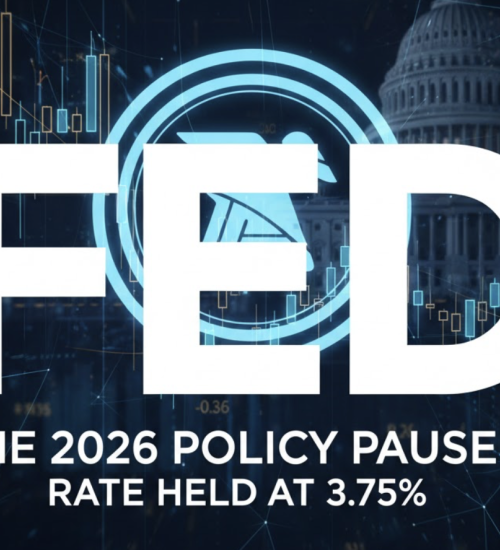
Title: The 2026 Fed Pause: Why Jerome Powell is Holding the Line at 3.75%
29 stycznia 2026

The latest updates from the European Central Bank (ECB) this week have sent ripples through the global financial markets. As the Digital Euro moves closer to full-scale integration in early 2026, the focus has shifted from theoretical frameworks to practical, cross-border implementation. For businesses operating between the Eurozone and major global hubs like Dubai or Singapore, the Digital Euro represents the most significant shift in liquidity management since the introduction of the physical currency itself.
Streamlining Global Liquidity The primary advantage highlighted in this week's financial audits is the drastic reduction in settlement times. Traditional correspondent banking, often plagued by delays and high fees, is being challenged by the programmable nature of Central Bank Digital Currencies (CBDCs). In 2026, "instant settlement" is becoming a reality for international trade. This is especially vital for the fintech sector, where the ability to move capital across borders without the friction of legacy banking systems is a massive competitive advantage.
The Rise of Programmable Money What makes the Digital Euro particularly transformative is the concept of programmable money. This week’s reports suggest that businesses are beginning to utilize smart contracts within the Digital Euro ecosystem to automate escrow and conditional payments. This eliminates the need for third-party intermediaries, reducing costs and increasing trust between international partners. For creators of payment infrastructures, this rollout represents both a challenge and a massive opportunity to build new, compliant interfaces that can handle CBDC transactions natively.
Conclusion As we look at the financial landscape of February 2026, the Digital Euro is not just a new form of currency; it is a new protocol for global commerce. Companies that are prepared to integrate these digital assets into their operational flow will lead the next wave of financial innovation, while those tethered to legacy systems risk being left behind in a faster, more transparent global economy.